



By Bobbie Whitehead
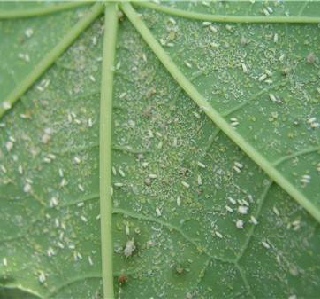
Gardeners interested in preventing a tomato whitefly infestation and diseases associated with the pest may want to try a natural method to offset the problem.
Researchers at the University of Florida have found that growing papaya plants near a tomato crop enables a tiny wasp, present in a pest on the tropical fruit, to feed on whitefly species affecting tomatoes.
This method, the Banker Plant System, places plants infested with a pest hosting known enemies, or parasites, near a crop the pests harm, according to the University of Florida Institute of Food and Agricultural Sciences Extension article “Using Banker Plants.”
“The papaya has a host-specific whitefly that doesn’t hurt tomatoes,” said Dr. Lance Osborne, professor of entomology at the University of Florida, who also works at the Mid-Florida Research and Education Center in Apopka. “It feeds natural enemies that don’t cause tomatoes any problems. The papaya whitefly doesn’t feed on anything but papayas. The natural enemies of the papaya whitefly feed on multiple whitefly species, especially the ones that attack tomatoes.”
Osborne and researchers at the University of Florida sought a method to control the whitefly since it can also cause the tomato yellow leaf curl virus, which reduces the tomato yields. The method, now in place, was needed since Florida growers rank as major U.S. tomato suppliers. UFL researchers are working with specialists in other states to establish this system.
The papaya system, for now, works primarily in Florida. Gardeners in other regions where papaya plants can survive may try to grow the plant to encourage the occurrence of the tiny wasp, known as the Encarsia sophia.
Another wasp species from the same family, the Encarsia formosa, too, feeds on tomato white flies and is purchased for the release in greenhouses and gardens. Though releasing friendly parasites aids in reducing the harmful pests, gardeners may have to purchase more parasites to release if the pests recur. With banker plants, the parasites “stay around longer” because they often have a greater food supply, IFAS Extension writes.
Gardeners may not be able to purchase papaya banker plants (plants with the Encarsia sophia and papaya whitefly) since federal and/or state permits may be needed to ship certain insects to other states. However, for now, Florida gardeners can grow the papaya plant and take advantage of the beneficial wasp.
If gardeners can’t grow the papaya, they may want to try two fungal sprays, Preferal – marketed by SePRO and Certis - and Botaniguard – marketed by Bioworks, to prevent whitefly problems, Osborne said. SePRO, however, only sells to the greenhouse industry. Both sprays are categorized as biological insecticides.